




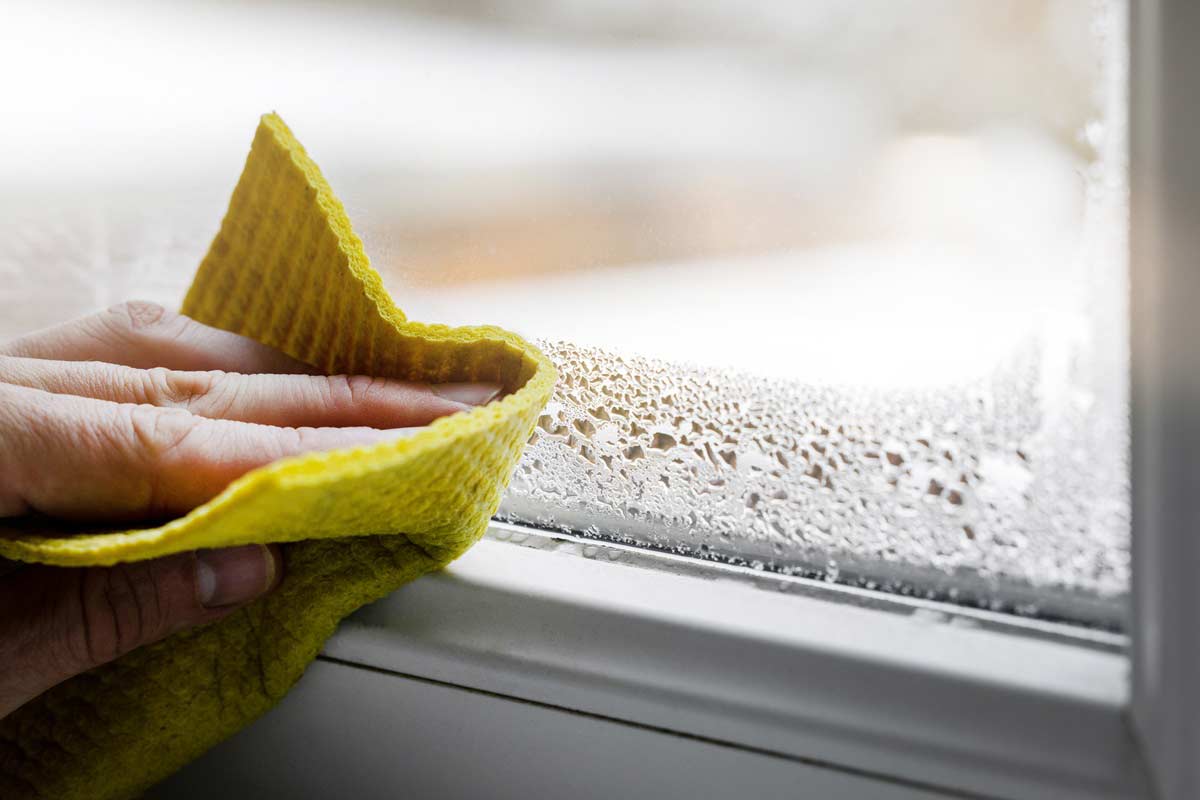
Condensation on Windows: What Causes It?

Table of contents
Condensation on windows occurs when moist air meets a colder glass surface. When the temperature at the glass drops to the dew point of the air, the water vapour can turn into tiny droplets on the pane. This is the same basic principle as when a cold glass becomes damp on the outside on a summer day.
Condensation, on the other hand, does not always mean that the whole house is too humid. It is enough that the glass, the frame or a neighbouring surface is cold enough for the relative humidity there to become so high that condensation forms. Therefore, condensation can occur locally at windows even if the humidity in the rest of the room is reasonable.
The problem is most noticeable in autumn and winter when the difference between indoor and outdoor temperatures increases. At the same time, we add moisture to our daily lives through showering, cooking, washing and drying, which makes condensation on windows particularly common at this time.
Measure humidity - an easy way to get an overview
It is difficult to determine humidity by feel alone. A hygrometer is therefore a good first step. It shows the relative humidity (RH), i.e. how much water vapour the air contains in relation to how much it can carry at the current temperature.
A simple hygrometer goes a long way in home use. The most important thing is not a single measurement, but how the values look over time. Temporary spikes after showering or cooking are normal. However, if humidity levels remain high for long periods, or if condensation recurs despite airing and normal use, it is worth taking a closer look at ventilation.
What levels are common indoors?
As a guideline, a relative humidity of around 40-60% is often described as a comfortable and balanced indoor range. At the same time, there is no single value that suits all homes all year round.
During the heating season, it is common for indoor RH to be lower, often around 20-40%, because cold outdoor air contains less moisture. In late summer and early autumn, however, the level may occasionally rise higher when the outdoor air is warm and humid.
Therefore, a hygrometer should be used as an aid to interpretation, not as a final answer. The most important thing is how the levels look over time, whether condensation recurs and whether the ventilation is working properly.
If you notice that indoor air humidity often remains at a high level and condensation becomes persistent, it is wise to review the air circulation in the home.
Why does condensation occur on the inside of windows?
Condensation on the inside of windows is the most common type. It occurs when warm and humid indoor air comes into contact with a cold glass surface and reaches its dew point. The colder the glass, the more easily condensation forms.
Common causes are a combination of moisture build-up in the home, cold surfaces and insufficient air exchange. Both the glass and areas around windows can be cooler than the rest of the room, especially in older windows or where there are thermal bridges. If the air is also stagnant near the window, the risk increases further.
Some common factors that influence how often this happens are:
- moisture from showering, cooking, washing or drying clothes indoors
- insufficient ventilation or valves not working properly
- cold glass, frames or other cooler areas around the window
- limited air circulation, for example if curtains or furniture block the air at the window
In tight and well-renovated houses, this can be more noticeable if the ventilation has not been adapted. When windows are sealed or replaced, unintended supply air is reduced, and the house still needs to get enough fresh air in the right way.
At very low outside temperatures, some condensation may occur even if the ventilation is working. If, on the other hand, the condensation is extensive, recurs frequently or remains on the inside of the panes for a long time, the cause should be investigated further.
Why does condensation form on the outside of windows?
Condensation on the outside has another explanation. Here it is the outer glass that gets cold, often after clear and still nights, and then moisture in the outdoor air can settle as mist or drops on the outside.
This is not normally a sign of a fault. On the contrary, external condensation often occurs on well-insulated windows, because so little heat escapes from the house that the outer glass remains cool. Therefore, condensation on the outside is usually mostly a temporary and visual problem.
Condensation between the panes of an insulating glass unit - what does it mean?
If condensation forms between the panes of a modern insulating glass unit, it is not just surface condensation. It usually means that the edge seal of the pane is no longer tight, so that moisture has got in between the panes.
This type of mist cannot be wiped off from either the inside or the outside and does not usually disappear with airing. If the problem recurs or persists, the pane will normally need to be inspected, repaired or replaced to restore the window's function.
How to reduce the risk of condensation on windows
If the condensation is on the inside, it is often possible to minimise the problem with relatively simple measures:
- Make sure that the ventilation is working and that the air inlets and outlets are not blocked.
- Clean filters, valves and fans according to the manufacturer's care instructions.
- Use higher fan mode or forcing when showering or cooking, if the system has that function.
- Give air a better chance to circulate at the window.
- Wipe off recurring condensation to prevent water from standing on frames and linings.
If you have recently sealed or replaced windows and at the same time notice more condensation, trapped air or higher moisture levels, ventilation may need to be adjusted. In older houses, leaks around windows have sometimes acted as part of the supply air, and when that route disappears, fresh air needs to come in by other means.
When should you act on condensation?
Occasional condensation associated with cold mornings, showers or cooking is normal. However, if the condensation is heavy, recurs frequently or remains on the inside of the windows for a long time, you should proceed.
This is especially true if you also see discolouration, feel musty odour, You may experience condensation on several cold surfaces or notice that the air feels stagnant. Condensation between the panes of an insulating glass unit should also be taken seriously, as it usually indicates a damaged seal.


