




Does a dehumidifier work in freezing temperatures?

Table of contents
Yes - but it all depends on the technology the dehumidifier uses. Not all dehumidifiers are designed to work at low temperatures, and in some cases, the effect can be greatly reduced or completely cancelled when the temperature approaches zero degrees.
To understand why, you need to know how different types of dehumidifiers work.
Short answer: A condensation dehumidifier does not normally work in sub-zero temperatures, while a desiccant dehumidifier can work effectively even below 0°C. The difference depends on how the technology is designed.
Why does temperature affect dehumidification?
Cold air can carry less moisture than warm air. Therefore, as the temperature drops, both the moisture content of the air and the efficiency of a dehumidifier change.
In unheated spaces - such as garages, storage rooms, crawl spaces or cold attics - the temperature often ranges from +10°C to below zero during winter. This places completely different demands on the technology compared to, for example, a laundry room or heated basement.
There are two main technologies: condensation dehumidifiers and desiccant dehumidifiers.
Does a condensation dehumidifier work in freezing temperatures?
A condensation dehumidifier works by cooling the air so that the moisture condenses into water. The technology is often very effective in warm environments, usually at temperatures above around +15°C.
When temperatures drop, two things happen:
- The dehumidification effect is greatly reduced
- Condensation surfaces and internal components may be at risk of icing
Below +10°C, many models clearly lose capacity. As the temperature approaches 0°C, the risk of ice can increase, and some units need defrosting or stop periodically. At sub-zero temperatures, they normally do not work as intended, as condensed moisture can freeze into ice.
A condensation dehumidifier is therefore rarely a good choice in spaces that are periodically near zero or below.
Does a desiccant dehumidifier work in freezing temperatures?
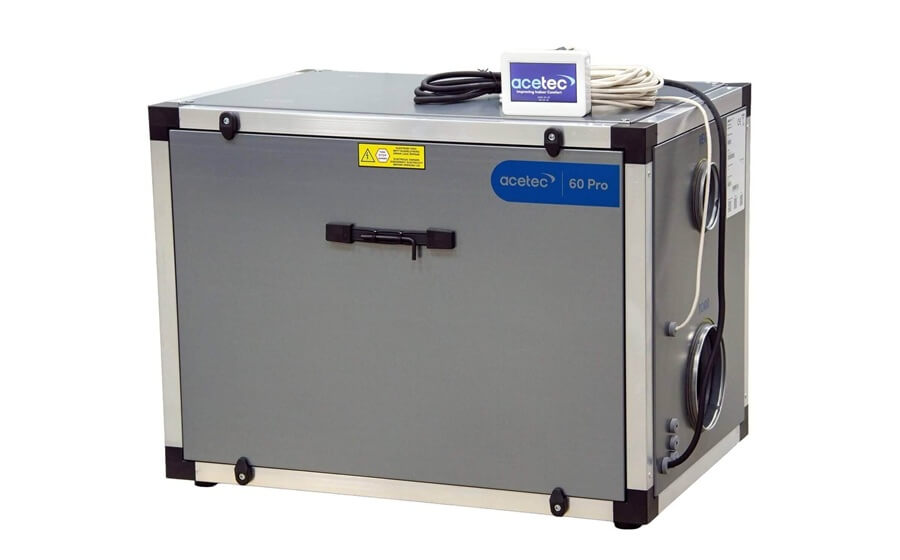
The answer is yes. A desiccant dehumidifier works with a rotor that contains a moisture-absorbing material, such as silica gel. Instead of cooling down the air, the material binds the moisture and transports it away.
As the process does not rely on condensation on cold surfaces, it is significantly less affected by temperature. This allows a desiccant dehumidifier to work effectively even when the temperature drops below 0°C.
This makes the technology suitable for example:
- Creeping foundations
- Cold winds
- Unheated garages
- Holiday homes in winter
- Cold stores and warehouses
📌 Reading tips: Which Dehumidifier Should You Choose?
What happens to moisture in cold spaces?
A common misconception is that cold air means low humidity risk. The problem arises when warm, moist air meets a cold surface, which can lead to condensation and rapidly high relative humidity.
A typical example is a crawl space:
- The soil releases moisture continuously
- Warm outdoor air is ventilated in spring and summer
- The air cools down and the relative humidity rises rapidly
Although the temperature may only be around +10°C, the relative humidity can be high enough for mould and microbial growth to occur.
This is why dehumidification in cold spaces is often more about controlling relative humidity than temperature.
The choice of technology is crucial to ensure that dehumidification works as intended in cold or unheated environments.


