




Root Deduction for Ventilation in 2026 – What Applies to Installation?

Table of contents
This article is a translated version and is only relevant in Sweden.
Are you planning to install or upgrade the ventilation in your home in 2026? Then, according to the current rules, you can use the root deduction and get a 30% tax reduction on the labour cost. Here we explain how the root deduction works, how large the deduction is and what applies to ventilation installations.
What is root deduction?
The root deduction is a tax reduction for repair, maintenance and remodelling in homes. Under current rules in 2026 the 30% deduction from the labour cost.
It is important to recognise that:
- The deduction only applies to the labour cost
- Materials, equipment and travel costs are not covered
- You must have paid enough tax to qualify for the deduction
The deduction is made directly on the invoice by the company carrying out the work.
How much can you get in root tax credits in 2026?
You can get up to SEK 50,000 per person per year in tax relief. If there are two of you who own the property, you can receive up to SEK 100,000 per year, provided you have enough tax to reduce.
Example of calculation
The root deduction is 30% of the labour cost. It is important to distinguish between labour cost and total construction cost, as materials, equipment, travel and other costs are not covered by the deduction.
Below are examples of how the deduction affects the cost of the labour element:
| Labour cost | Root deduction (30%) | Paying for labour |
|---|---|---|
| SEK 40 000 | 12 000 kr | SEK 28 000 |
| 80 000 kr | SEK 24 000 | SEK 56 000 |
| SEK 120 000 | SEK 36 000 | SEK 84 000 |
| 166 700 kr | 50 000 (max per person) | 116 700 kr |
Example
If the total price is SEK 120,000, of which SEK 50,000 is labour and SEK 70,000 is materials, the deduction is calculated only on the labour part.
SEK 50,000 × 30% = SEK 15,000 in root deduction.
You will then pay £35,000 for the work + £70,000 for materials, making a total cost of £105,000.
Please note: Red deduction only applies if all the conditions according to the Swedish Tax Agency's rules are met. Always check current rules on the Swedish Tax Agency website before you order the work.
General conditions for root deductions
In order to use the root deduction, you must
- You own the property where the work is carried out
- The dwelling is a permanent residence or a holiday home
- The work is carried out in an existing dwelling (not new construction)
- The company hired has F-tax
New installations in a newly built house do not normally qualify for the redundancy deduction, as the deduction applies to work on existing dwellings.
With these basic conditions in place, we can take a closer look at how the rules are applied when installing and upgrading ventilation.
Root deduction for installation and upgrading of ventilation
The root deduction can normally be used for the installation, replacement, repair and improvement of ventilation systems in existing dwellings, provided that all conditions are met.
This applies to both minor measures and major upgrades of ventilation systems.
Examples of ventilation work that can be covered
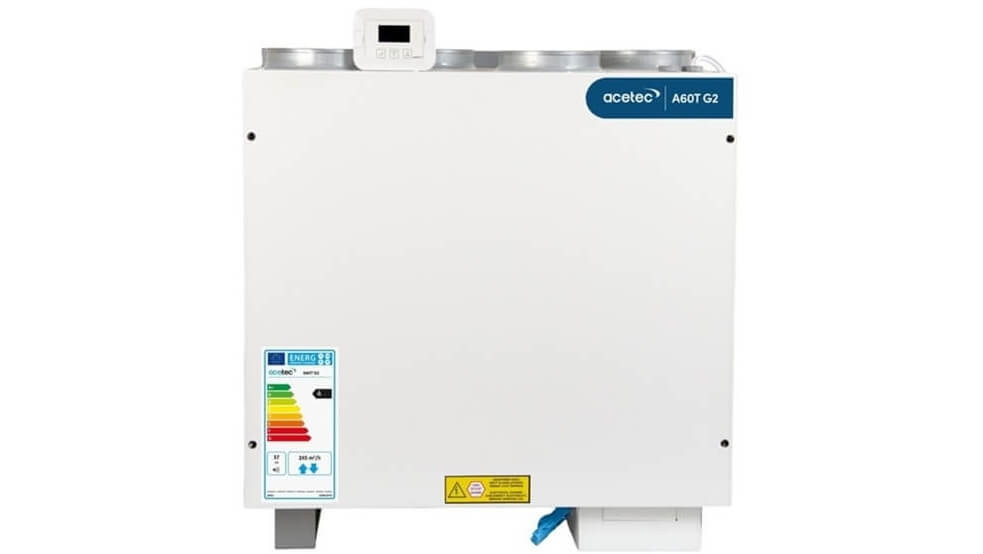
- Installation of FTX units
- Replacement of ventilation units including disassembly and connection
- Installation of exhaust air systems
- Ductwork in an existing dwelling
- Major maintenance and technological upgrades
The root deduction only applies to the labour cost. The following costs are normally not covered:
- Purchase of ventilation units without installation
- Material costs (aggregates, ducts, valves, etc.)
- Work in newly built housing
In case of uncertainty, you should always ask the company to specify the labour cost clearly in the quote.
Differences between detached and semi-detached houses
In the case of a detached house, the root deduction applies to work carried out in the dwelling and on the land directly adjacent to the house.
In a tenant-owner apartment, the deduction applies to work carried out inside the apartment that you are responsible for and pay for yourself. Measures in the association's common ventilation system are not normally covered.
What does a ventilation upgrade mean?
In many older homes, ventilation is based on self-draught or simple exhaust air systems. Upgrading to a more modern system will provide better control of air circulation and a more stable indoor climate.
For example, when installing an FTX system with heat recovery, the heat in the exhaust air is recovered before it is vented. This can reduce energy losses compared to older solutions while providing more controlled air circulation.
If you want to read more about how the systems work at home, see our page on FTX units for villas.
How the process works
- Contact a ventilation company with F-tax.
- Request a quote where the labour cost is clearly specified.
- The deduction is made directly on the invoice.
- The company applies for compensation from the Swedish Tax Agency.
This means that you do not need to apply for the root deduction yourself - it is handled by the company carrying out the work. For full terms and conditions, please refer to the Swedish Tax Agency's information on root deductions.
Frequently asked questions
Does root deduction apply to ventilation cleaning?
Simple cleaning is not normally considered to be root work. However, more extensive maintenance or technical interventions may be covered, depending on the nature of the operation.
Does the deduction apply to holiday homes?
Yes, if you own the holiday home and it is classified as a residence according to the Swedish Tax Agency's definition.
Do I have to apply for the root deduction myself?
No, it doesn't. The company makes the deduction on the invoice and handles the application with the Swedish Tax Agency.


